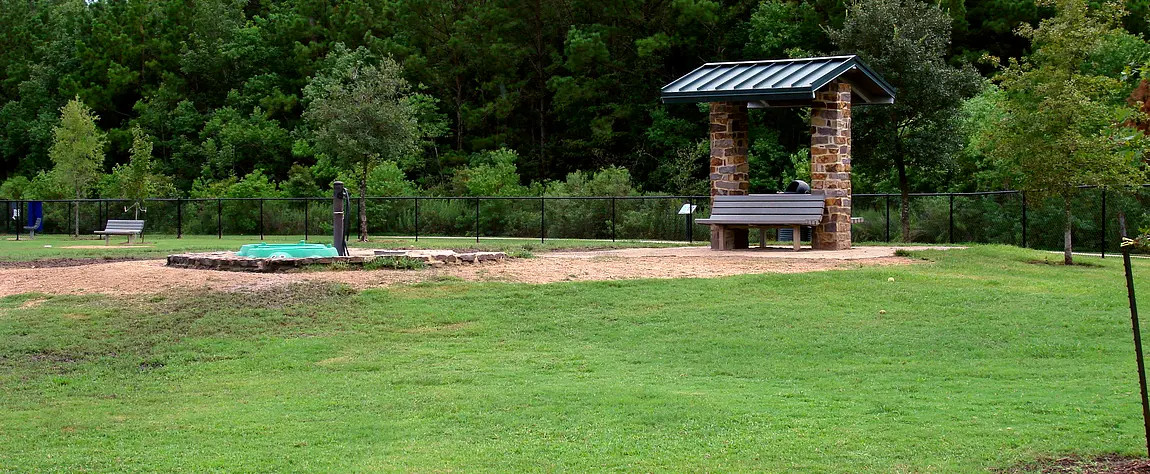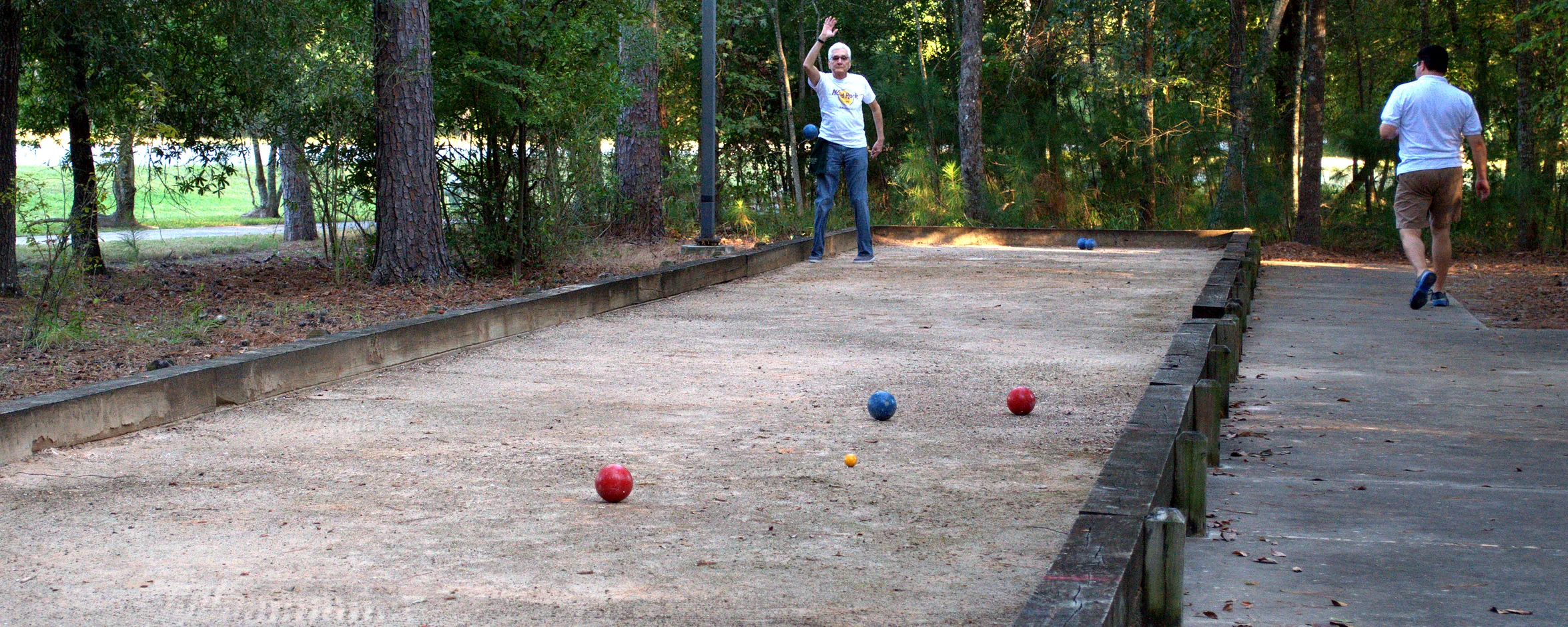
Bocce (say BAH-chee, and sometimes spelled bocci or boccie) is a lawn bowling game from Italy. Two sides take turns rolling heavy balls toward a small target ball, and the side that ends up closest scores. It’s easy to learn, needs little running and works for mixed ages. The Woodlands Township park system has one public bocce court, at Avalon Park in the Village of College Park.
Where to Play: Avalon Park
8585 Grogan’s Mill Rd., The Woodlands, TX 77381, Village of College Park.
Avalon Park sits about two blocks into the Grogan’s Forest neighborhood, just north of Research Forest Drive. The court has no lights, so plan on daylight. The Township’s page for the park lists no equipment to borrow, so bring your own set.
Township parks are open from dawn to dusk, and lighted courts and fields stay open until 11 p.m.; the rest of the rules are on our Park Types & Rules page. For hours, reservations and closures, see Avalon Park on the Township’s official parks site.
More parks nearby: College Park public parks. Other courts: Tennis & Pickleball.
What You Need
A set has eight bocce balls, four each in two colors, and one smaller target ball called the pallino (or jack). Regulation balls are 107 mm across and weigh about 920 grams, roughly 2 pounds. Lighter 90 to 100 mm sets are easier for children to throw. The balls come in wood, metal, baked clay or plastic. Unlike lawn bowls, they’re perfectly round, so they roll true with no built-in curve.
The Court
An official court is about 87 by 13 feet with low walls around it, but a casual game works on any fairly flat patch of grass, packed dirt or sand. On open ground, agree on the boundaries and a throwing line before the first frame. Under the U.S. Bocce Federation’s open rules, the pallino has to cross the court’s center line to count. Without a court, try moving to a fresh patch of ground for each frame, so no two frames play the same.
How to Play
- Split into two sides: one against one, or teams of two, three or four. Each side gets four balls, shared out among its players.
- Toss a coin. The winning side throws the pallino from behind the foul line, then rolls the first bocce ball as close to it as it can.
- The other side rolls next. From then on, the side whose closest ball is farther from the pallino keeps rolling until it gets closer or runs out of balls.
- Hitting the pallino or knocking an opponent’s ball out of the way is allowed, and it’s a big part of the strategy.
- When all eight balls are played, the frame is over. Switch ends for the next frame; the side that scored throws the pallino.
Scoring
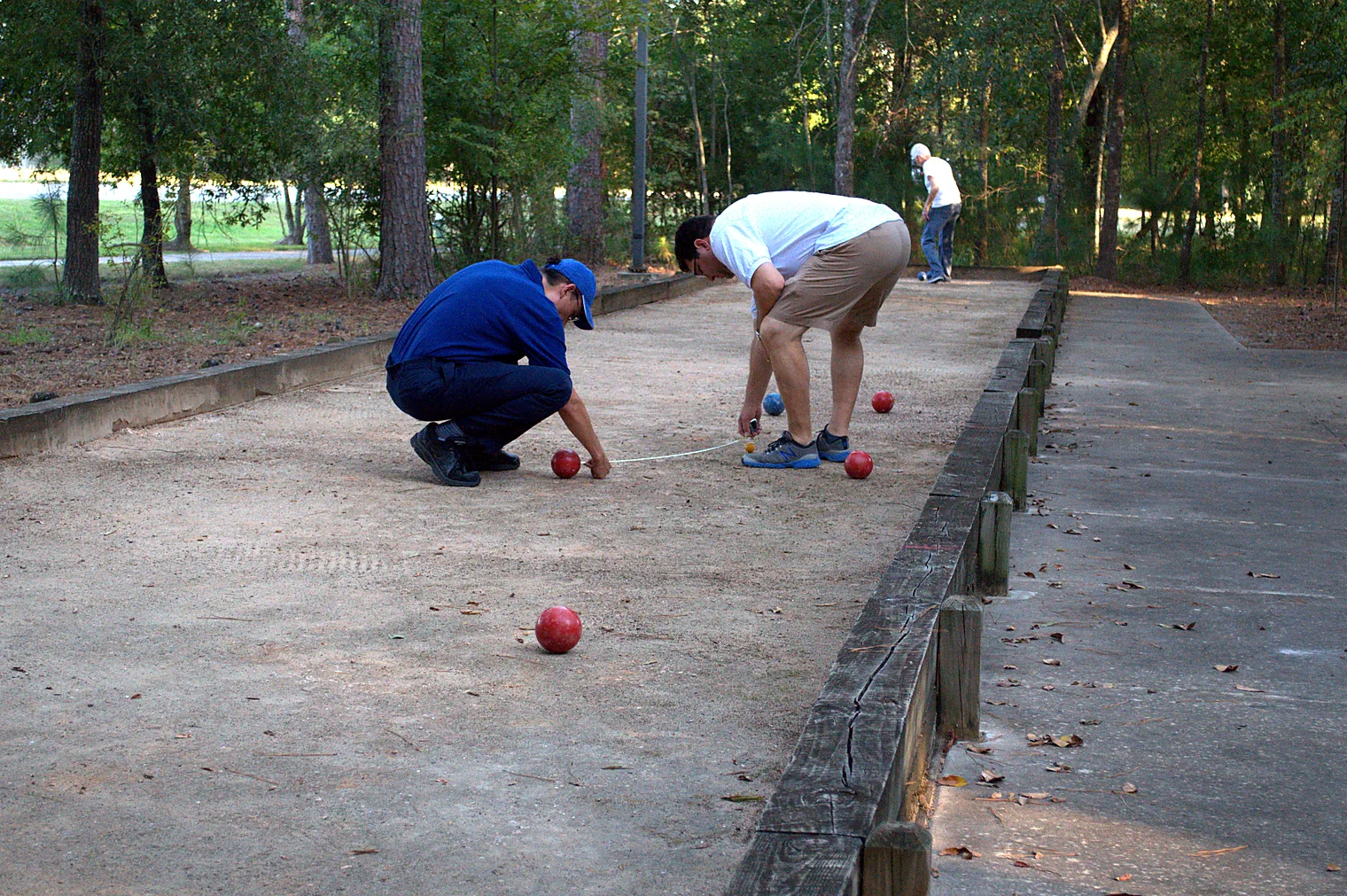
Only one side scores in a frame. It gets a point for each of its balls that is closer to the pallino than the other side’s closest ball. If the two closest balls are tied, nobody scores. Tournament games usually go to 12 points; casual games often play to 13, 15 or 21. Some backyard players count a ball touching the pallino (a “baci,” or kiss) as two points, so agree on that before you start.
Throwing Tips
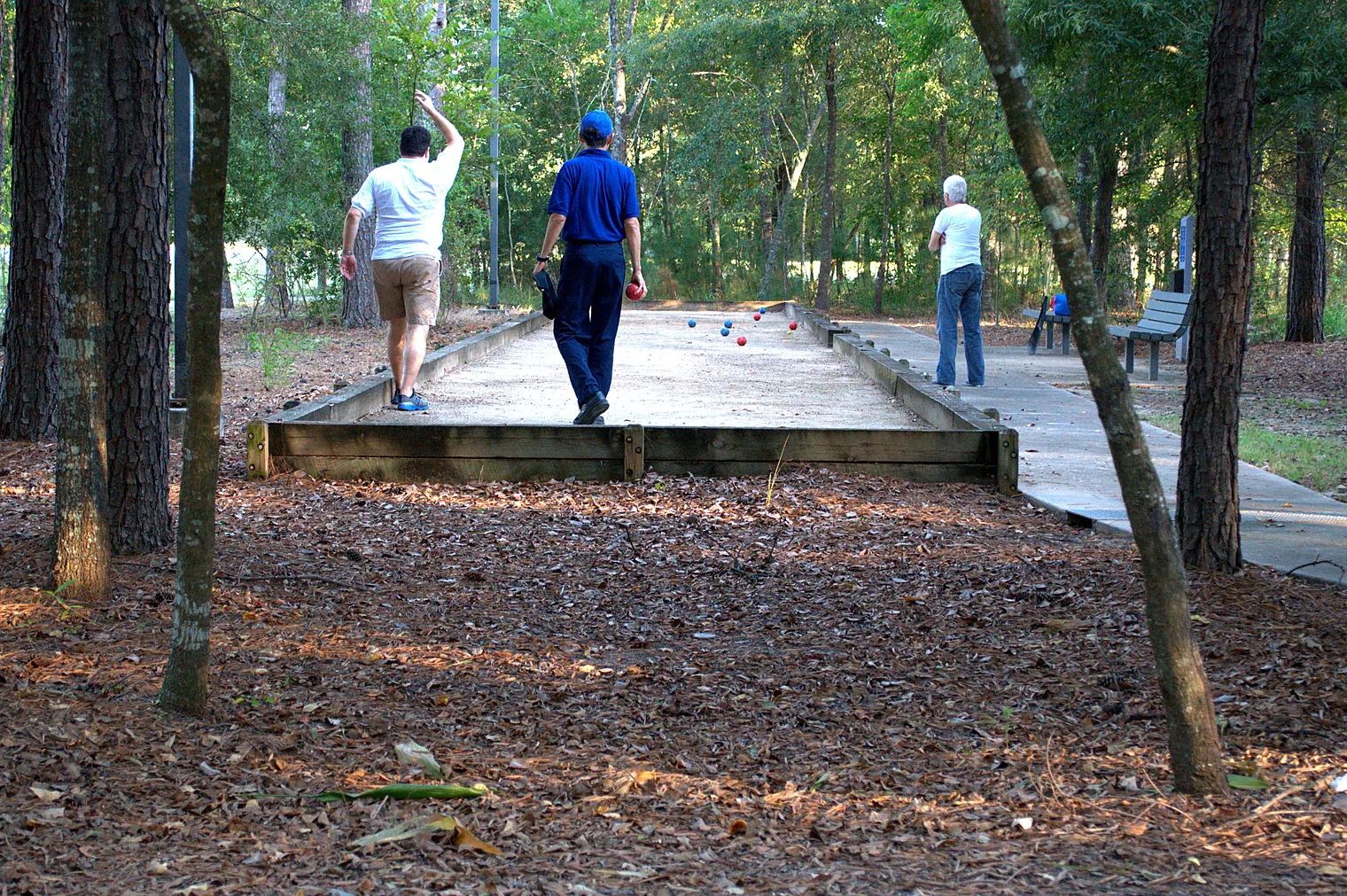
Most players throw underhand with the palm under the ball. A high, soft lob stops close to where it lands, while a low, firmer roll keeps going, so aim short of the spot you want on low throws. Some players grip the ball from above instead and flick the wrist forward as they let go.
A Little History
Bocce belongs to the boules family, along with English lawn bowls and French pétanque, and all three trace back to ball games played in the Roman Empire. The modern game took shape in Italy, where bocce is the plural of boccia, “bowl.” Italian immigrants brought it to the Americas, and it has spread well beyond those communities since.
The Woodlands Texas Activities Guide

Family Activities
For the same reasons many choose to make their home here, families find charm and appeal in spending a day, a weekend or a week in The Woodlands.

Waterway Activities
The centerpiece of Waterway Square is the 120' Waterwall and circular fountain featuring regularly scheduled light and music shows. The public venue also features restaurants, hotels, and is the nightlife area of The Woodlands Texas.

Festivals in The Woodlands
Several festivals and other outdoor events held throughout the year in Town Center. Festival events are frequently held on the Great Lawn in Town Green Park including, the Annual Crawfish festival.

Sports Activities
From the jogging loop in Grogan's Mill, you can travel along the pathways to Disc Golf courses, pickle ball courts, Bocci Ball, and various playfields.

Swimming Pools

Live Music in The Woodlands
Throughout the year, you’ll hear about concerts, performance art shows, festivals and free live music, all happening in The Woodlands.